Why Sellmitra is the Best Shopify Alternative in India
Compare Sellmitra and Shopify to find the right ecommerce platform for your business. Learn about pricing, mobile-first features, zero commission, and Indian-focused tools.

Shopping is not always a one-person activity.
A contractor may decide what materials are needed, but the property owner makes the purchase. A mistry may prepare a list of hardware items and send it to the owner. At home, one family member may start the grocery shopping while everyone else wants to add their own requirements. In an office, employees may know what they need, while the manager or purchase team actually places the order.
Today, these situations are often handled through WhatsApp messages, screenshots, product links, phone calls, spreadsheets, or simply passing a phone around.
Share Cart makes this process much simpler.
Create a cart, share it with another person, let them select the products they need, and complete the purchase from their own cart.

Share Cart allows a customer to share selected products from their cart with another person.
The recipient opens the shared cart and can:
The important part is that the shared cart does not have to become the recipient’s complete cart.
The recipient remains in control of what they actually want to purchase.
That makes Share Cart useful for much more than simply sending product links.
Imagine a hardware store.
A mistry is working at a customer’s house and realizes that several products are required:
Instead of sending seven different WhatsApp messages or asking the owner to search for every product, the mistry can add everything to a cart and share it.
The owner receives the cart, reviews the products, selects what they want to purchase, and adds those products to their own cart.
One person creates the requirement. Another person makes the purchase.
That is the real value of Share Cart.
Shopping decisions are frequently made by more than one person.
Research published in the Journal of Retailing and Consumer Services studied couples making purchase decisions together. The researchers found that joint decision-making increased both the number of items selected and purchase value. In their experimental setting, the effects were as much as four times higher than individual decision-making for joint consumption.
This does not mean that every store will see a 4× increase from adding Share Cart. The study was conducted in a specific experimental context.
But it demonstrates an important principle:
When people participate together in a purchase, they can make different and potentially larger purchasing decisions than when shopping individually.
That creates an interesting opportunity for ecommerce businesses.
This is one of the strongest use cases.
A mistry or contractor is working on a project and knows exactly what materials are required.
Instead of telling the owner:
“Buy 4 elbows, 2 pipes, 1 sealant and 20 screws.”
The mistry creates a cart and shares it.
The flow
Benefit for the business: The hardware store gets a structured purchase instead of a conversation containing several product requests. It can also reduce the possibility that the customer searches for the wrong product or purchases from another store because finding the products is too difficult.
Consider a family doing their weekly grocery shopping.
One person opens the store and starts creating a cart. Instead of asking “What does everyone want?” they simply share the cart with the family.
Everyone participates, but the family still gets one combined purchase. Research on joint shopping supports the broader idea that shopping together can influence purchase quantity and value.
Benefit for the business: The store gets the opportunity to capture requirements from multiple members of the same household instead of relying on one shopper to remember everything.
An employee needs:
The employee may know exactly what is needed, but may not have purchasing authority. Instead of sending an email containing six links, the employee creates a cart and shares it with the manager or purchasing team. The manager reviews the cart and completes the purchase.
This is very similar to the collaborative purchasing workflow Amazon Business has introduced with its own Shared Cart feature. Amazon describes the feature as a way for employees to build carts and share them with authorized buyers, who can review the items, pricing, context and purchasing controls before checkout.
Benefit for the business:
A contractor may prepare a list of materials required for a particular stage of a project. For example, a bathroom renovation:
The contractor creates the cart and shares it with the homeowner. The homeowner can review the list and decide which products to purchase. This creates a simple bridge between recommendation and purchasing.
Benefit for the business: Instead of the contractor sending product names and the homeowner searching for them manually, the ecommerce store becomes part of the project workflow.
An interior designer may select products for a customer’s home:
The designer can create a product selection and share it with the homeowner. The homeowner doesn’t have to search for every recommended product. They simply open the shared cart and select the products they want.
Benefit: This can turn an ecommerce store into a product selection and approval platform, rather than just a product catalog.
A restaurant employee may notice that several supplies need to be purchased:
The employee creates the cart and shares it with the owner or purchasing manager. The owner reviews and purchases the approved products.
Benefit: The people who know what is needed do not necessarily need purchasing access. Share Cart separates product selection from purchase authority.
A salesperson can create a selection of products for a retailer and share the cart. For example: “These are the products currently available for your store.”
The retailer opens the cart and selects the products they actually want. This is especially useful when a business sells dozens or hundreds of SKUs. Instead of sending a PDF catalogue or hundreds of WhatsApp product images, the salesperson can send one product selection.
Benefit for the wholesale business: The seller can make product discovery easier while the retailer retains control over the final order.
A supplier can prepare a collection of products and share it with a reseller. The reseller can then:
This can make product distribution much easier for businesses that operate through WhatsApp, Instagram and social selling.
There is another important benefit.
A shared cart naturally introduces another person to the store. Imagine a customer shares a cart with a friend who has never purchased from the store before.
The recipient opens the link. They see the products. They select products. They create their own cart. They may eventually become a customer.
This means every shared cart has the potential to become a product discovery and customer acquisition touchpoint.
The business does not necessarily need to acquire that second customer through another advertisement. The existing customer introduced them to the store.
There is already evidence from ecommerce businesses that collaborative carts can have measurable commercial impact.
Bevy Commerce published a case study about Ninja Transfers, a business serving customers who often need to collaborate on purchasing decisions. According to Bevy’s reported results after implementing its Share Cart functionality:
These are vendor-reported results from a specific customer, so they should not be treated as an industry-wide benchmark. But they provide a useful real-world example of what can happen when an existing collaborative purchasing behavior is made easier.
The important lesson is not the exact percentage. It is this:
Customers were already collaborating. The technology simply removed the friction.
The concept isn’t limited to ecommerce stores.
In 2024, Zomato introduced group ordering, allowing users to share a link with friends or family so multiple people could add their desired items to a single order. The goal was to make group ordering easier without passing one phone around.
Amazon Business has also introduced Shared Cart specifically for organizational purchasing, allowing requestors to build carts and share them with authorized buyers. Amazon highlights use cases such as team purchasing, approval workflows and consolidating orders to potentially unlock quantity discounts and reduce shipping costs.
This shows that collaborative purchasing isn’t a niche behavior limited to one type of business. It appears in:
When multiple people participate in a purchasing decision, more requirements can be discovered before checkout. A family member may remember something another person forgot. An employee may add another required office item. A contractor may add additional materials.
This can increase the number of products considered before the final purchase. The academic research on joint shopping provides evidence that joint decision-making can increase purchase quantity and value.
Instead of:
Product → Order
Share Cart enables:
Product selection → Collaboration → Product selection → Combined purchase
This gives businesses more opportunities to build a complete basket.
A person doesn’t have to manually search for every product recommended by someone else. The products are already inside the shared cart. The buyer simply reviews and selects.
That reduces friction between “I need this product” and “I have purchased this product.”
Without Share Cart:
“Send me the link.” “Which one?” “This one.” “How many?” “Two.” “What about the other item?” “Wait, I’ll send it.”
With Share Cart:
Create cart → Share link → Select → Purchase
This is particularly powerful for businesses that already sell through WhatsApp.
Traditional ecommerce assumes:
One person → One cart → One checkout
But real-world purchasing often looks more like:
Share Cart connects these people without forcing everyone to use the same account or the same device. That is why the feature can be useful for both B2C and B2B commerce.
| Business | Cart created by | Shared with |
|---|---|---|
| Hardware | Mistry | Property owner |
| Construction | Contractor | Client |
| Grocery | Family member | Family |
| Office supplies | Employee | Manager |
| Restaurant | Staff member | Owner |
| Interior | Designer | Homeowner |
| Wholesale | Salesperson | Retailer |
| Reseller | Supplier | Reseller |
| Event supplies | Organizer | Team/family |
| School supplies | Teacher/admin | Purchase manager |
The common pattern is simple:
The person who knows what is needed is not always the person who makes the purchase.
Share Cart connects those two roles.
The biggest opportunity isn’t simply allowing customers to share a cart. It is allowing ecommerce businesses to support how people actually make purchasing decisions.
People don’t always shop alone. They ask:
Most ecommerce platforms are optimized for the final step:
Add to Cart → Checkout
Share Cart focuses on everything that happens before checkout. And that is where a surprising amount of purchasing coordination takes place.
Whether it is a mistry sharing a hardware list with a property owner, a family planning their grocery order, an employee sending requirements to a manager, or a salesperson sharing products with a retailer, the underlying problem is the same.
The person selecting the products and the person making the purchase may be different people.
Share Cart brings them into the same purchasing journey.
Create a cart. Share it. Let people choose. Buy together.
That can make ecommerce more collaborative, more convenient, and potentially more valuable for both customers and businesses.

Join our WhatsApp channel for quick tips, product updates, and ideas to help you grow your online store efficiently.
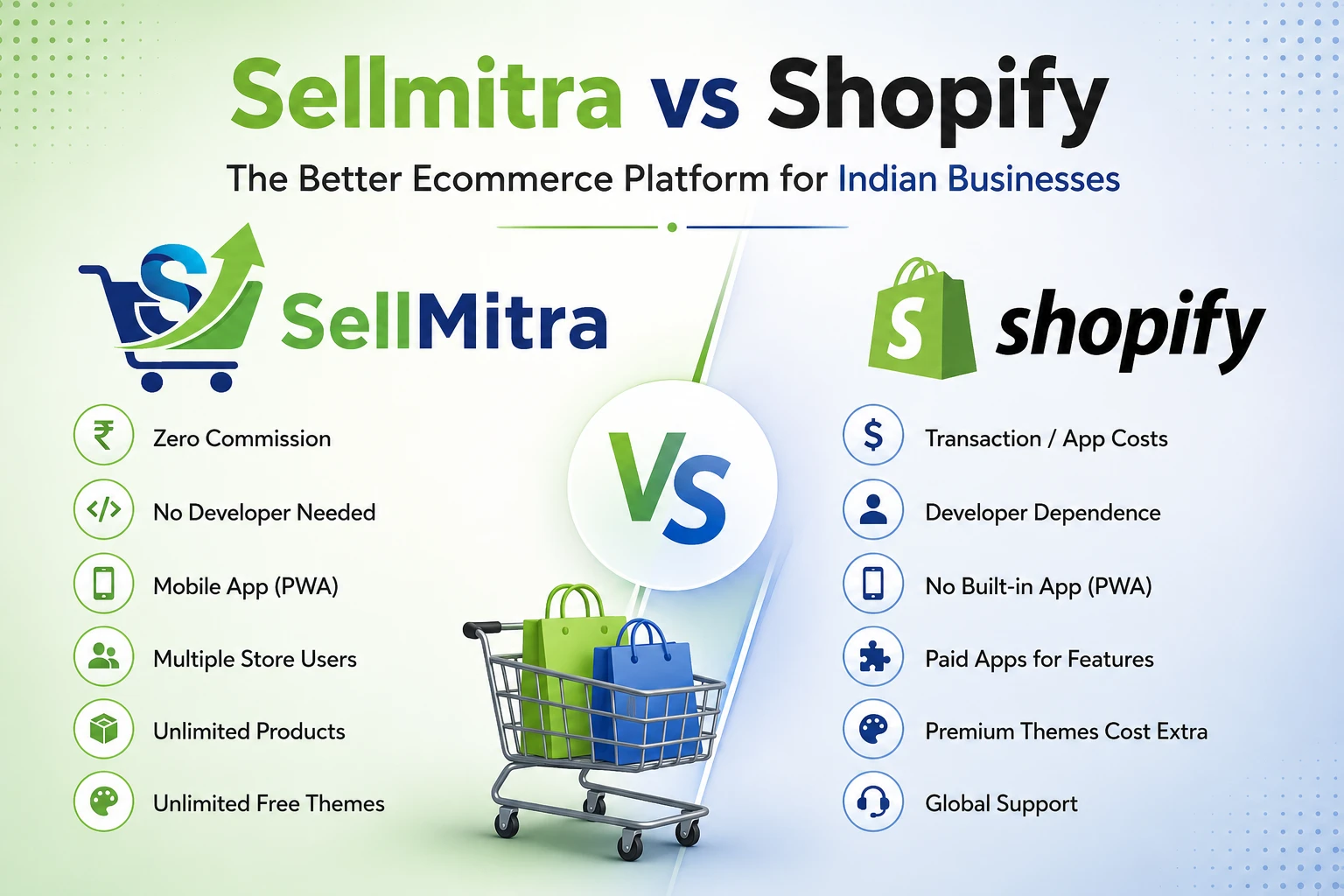
Compare Sellmitra and Shopify to find the right ecommerce platform for your business. Learn about pricing, mobile-first features, zero commission, and Indian-focused tools.

Discover why mobile apps are transforming ecommerce in India. Learn the benefits of PWAs, mobile commerce trends, and how they help grow sales.

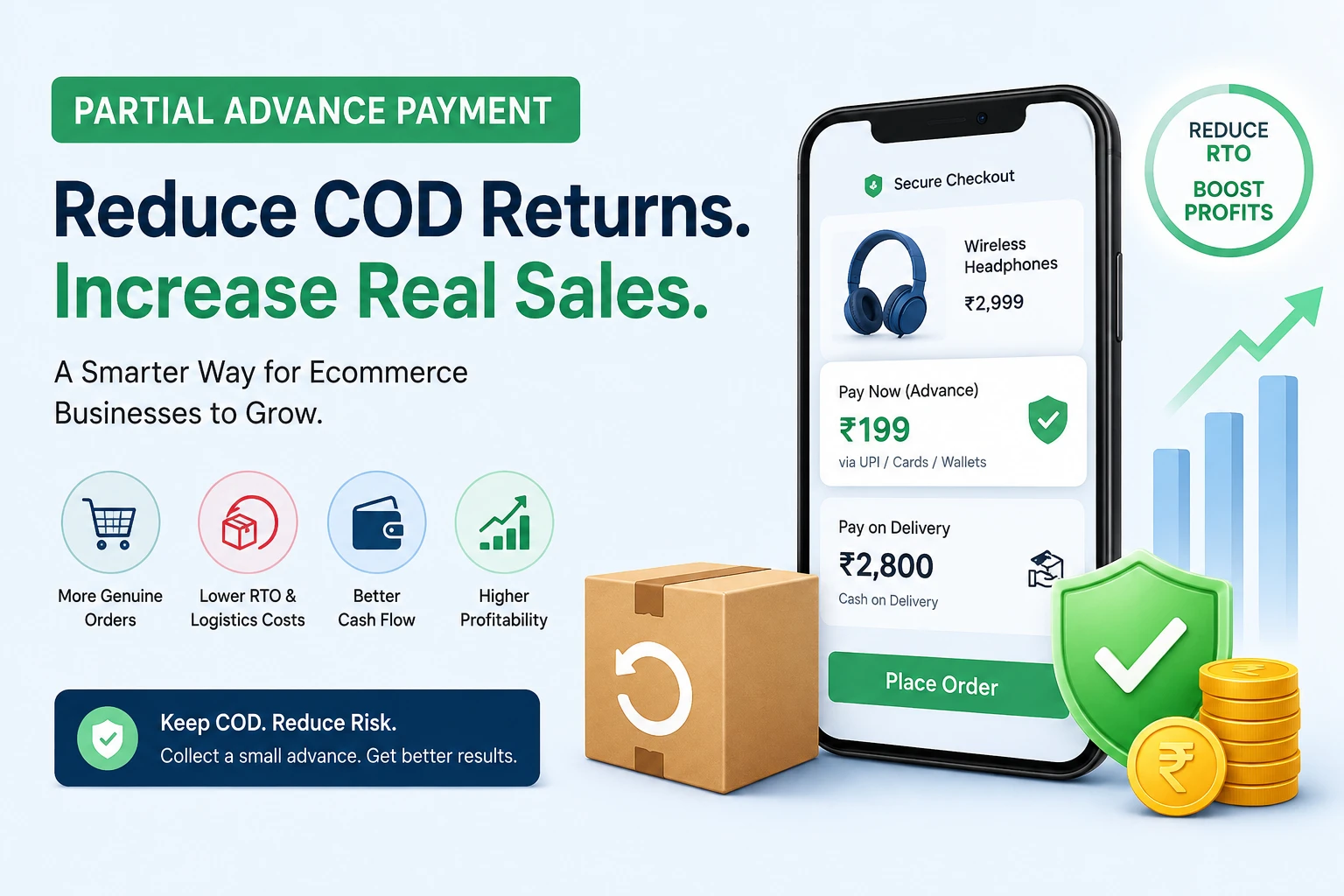
Learn how Partial Advance Payment helps ecommerce businesses reduce RTO, improve cash flow, increase genuine orders, and build customer trust without removing Cash on Delivery.
We can help you to create your dream website for better business revenue.