Why Sellmitra is the Best Shopify Alternative in India
Compare Sellmitra and Shopify to find the right ecommerce platform for your business. Learn about pricing, mobile-first features, zero commission, and Indian-focused tools.

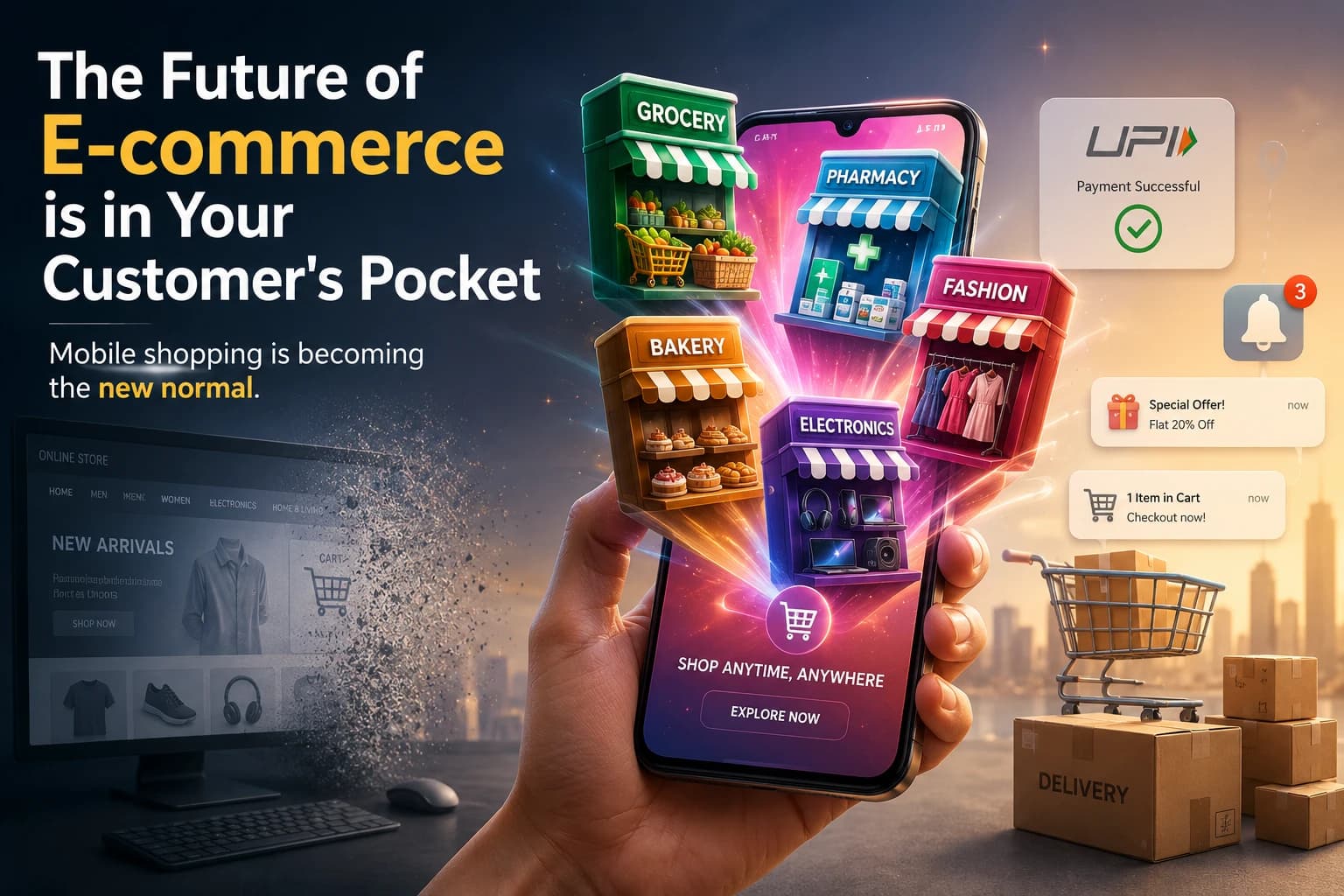
Imagine you've opened a beautiful retail store in the middle of a busy market.
Your products are excellent, your prices are competitive, and your staff provides great service. Hundreds of people walk past your store every day, but only a few remember to come back.
Now imagine every previous customer carried a small reminder of your store in their pocket. Every time they unlocked their phone, they saw your store's icon. Whenever you launched a sale, they instantly received a notification. Reordering took only a few taps.
That is exactly what a mobile app can do for an e-commerce business.
Many business owners still believe mobile apps are only for companies like Amazon, Flipkart, or Myntra. That may have been true a decade ago, but today's shopping habits tell a different story. Smartphones have become the primary shopping device for millions of Indians, making mobile apps an increasingly important part of online retail.
In this article, we'll look at why mobile apps have become so important, how India compares with the rest of the world, and why Progressive Web Apps (PWAs) are making mobile apps accessible even for small businesses.
India has undergone one of the fastest digital transformations in the world.
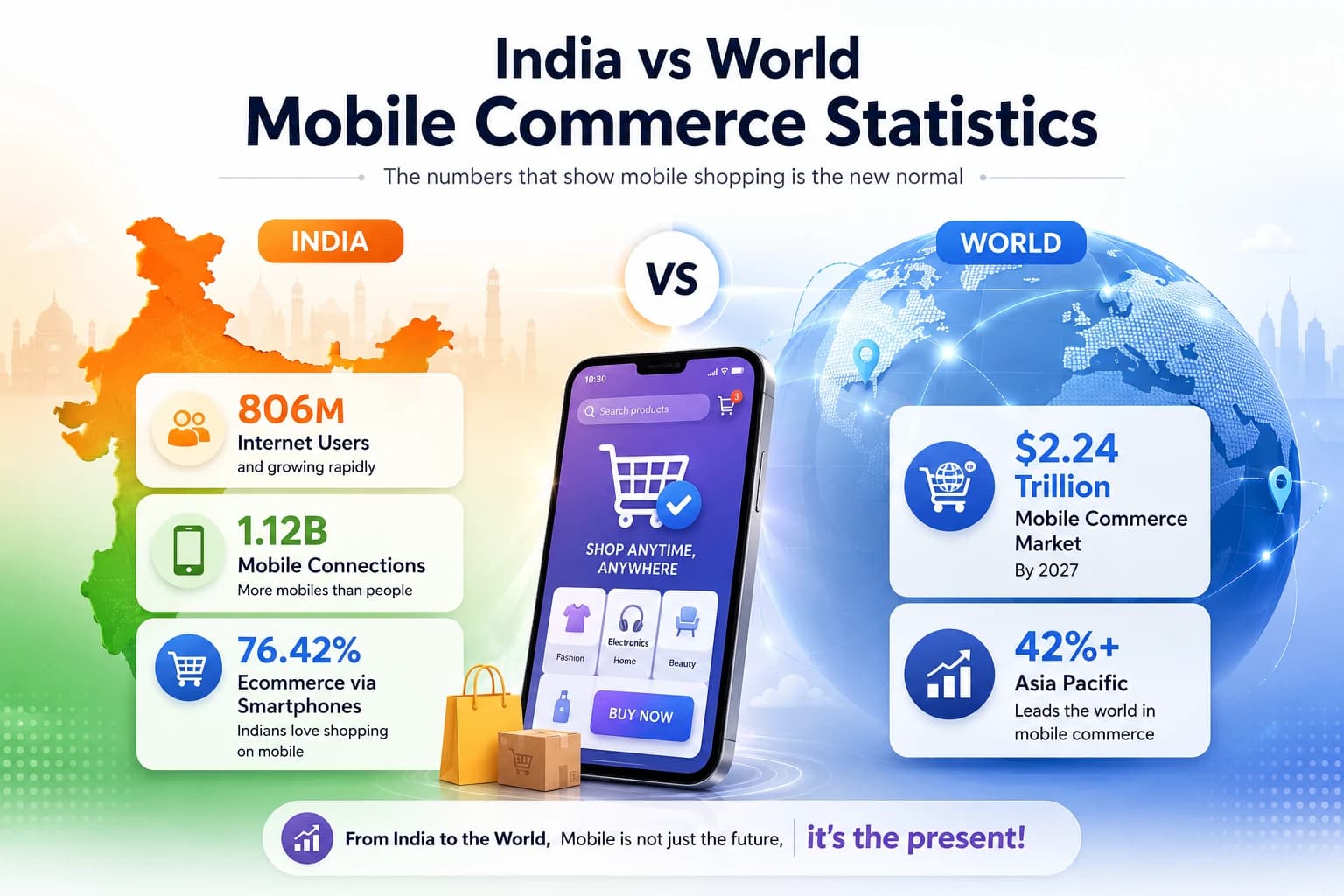
According to DataReportal's Digital 2025 India Report:
This isn't just about internet access. It reflects how people live their daily lives. From ordering groceries and medicines to paying bills and shopping for clothes, smartphones have become the preferred device.
The ecommerce industry reflects this trend as well.
According to Mordor Intelligence, smartphones account for approximately 76.42% of India's ecommerce market in 2025.
Think about what that means.
If four customers purchase from your online store, roughly three of them are likely shopping using a smartphone.
For most online businesses in India, mobile shoppers are no longer a secondary audience. They are the primary audience.
India is not alone.
The shift toward mobile shopping is happening globally.
According to Fortune Business Insights, the global mobile commerce market is estimated to reach USD 2.24 trillion in 2025, with the Asia-Pacific region accounting for over 42% of the market.
The report attributes this growth to several factors:
India is one of the largest contributors to this growth because of widespread smartphone adoption and the rapid expansion of digital payments.
A few years ago, customers typically searched for products using a desktop computer.
Today, shopping often begins while:
Customers browse products, compare prices, read reviews, and complete purchases without ever opening a laptop.
This change has transformed customer expectations.
People expect online stores to load quickly, remember their preferences, offer simple checkout, and make repeat purchases effortless.
Businesses that provide this experience are more likely to earn repeat customers.
Having a professional ecommerce website is essential, but relying only on a website can create challenges.
Imagine one of your customers purchases from your store today.
A month later, they want to buy again.
Will they remember your website address?
Will they search for your brand again?
Will they accidentally visit a competitor instead?
These small moments influence repeat sales.
A mobile app reduces this friction because your store remains visible on the customer's phone.
Instead of searching again, they simply tap your app icon.
The shopping journey becomes much shorter.
One of the biggest advantages of a mobile app is that it allows businesses to remain connected with existing customers.
For example:
A grocery store can notify customers about today's fresh vegetables.
A pharmacy can remind customers when it's time to reorder medicines.
A fashion store can announce a festive sale.
A bakery can notify customers when fresh cakes become available.
Without an app, customers may never know these updates unless they actively visit your website.
With an app, businesses can communicate instantly through push notifications, helping bring customers back when there is something genuinely valuable to share.
Acquiring a new customer usually requires advertising, promotions, or marketing.
Keeping an existing customer engaged is often more cost-effective.
Mobile apps support repeat business by making reordering faster and more convenient.
Consider a customer who orders groceries every week.
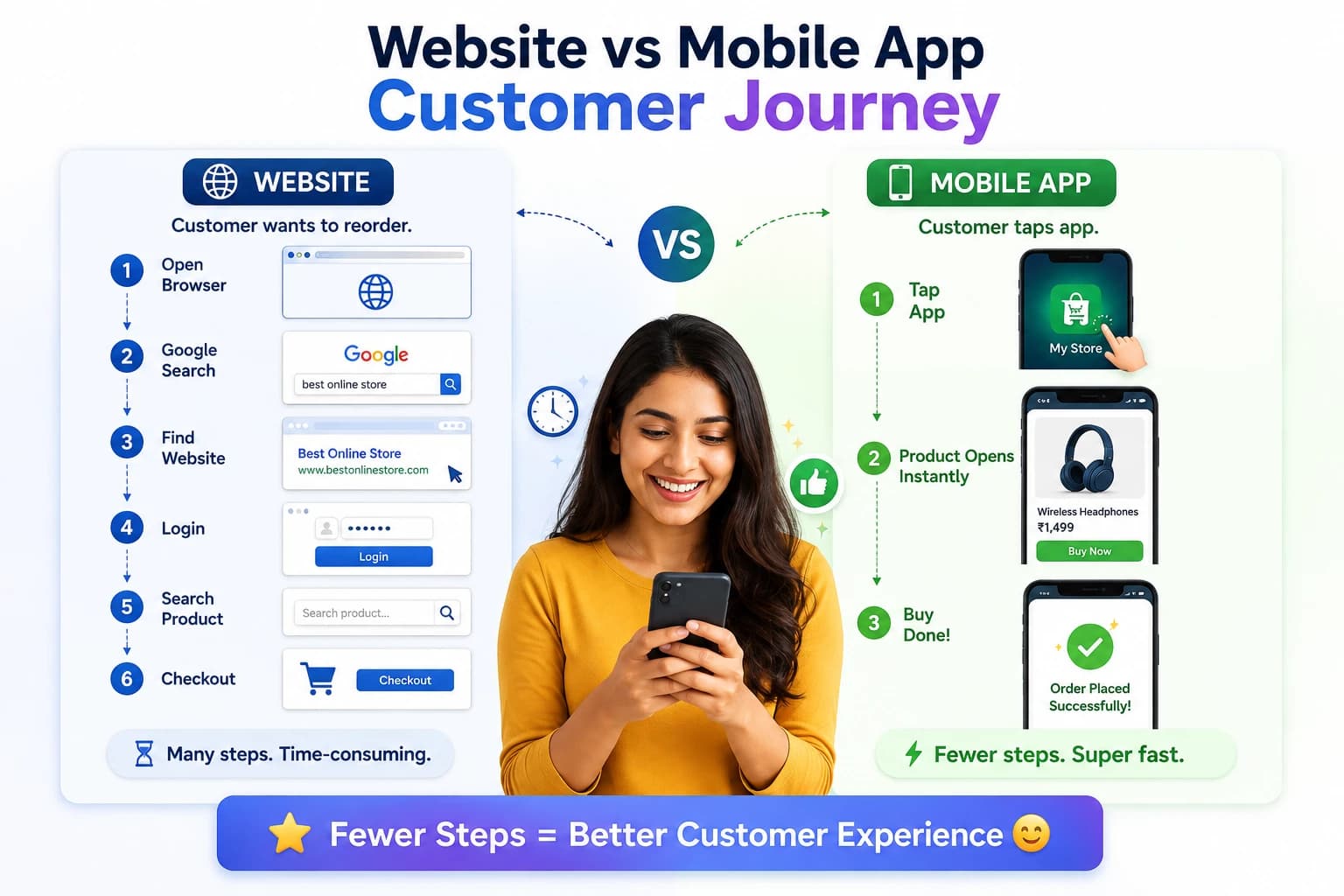
On a website, they may need to:
With an app, much of this process is simplified.
The app is already available on their phone, and the shopping experience can feel more direct.
Reducing even a few steps can make repeat purchases more convenient.
Every day, people unlock their phones dozens of times.
Each time they see your app icon, your brand receives another moment of visibility.
This doesn't guarantee a purchase, but it helps keep your business top of mind.
A website only becomes visible after a customer intentionally opens a browser and visits it.
An app becomes part of the customer's everyday digital environment.
Many Indian businesses serve customers who buy repeatedly.
Examples include:
These businesses depend on repeat purchases rather than one-time transactions.
A convenient mobile shopping experience can encourage customers to return more often.
This is where many small businesses hesitate.
Traditional mobile apps often require:
For startups and small businesses, this investment may not always be practical.
Fortunately, technology has evolved.
A Progressive Web App combines many of the advantages of a website with the convenience of a mobile app.
Think of it as a website that behaves like an app.
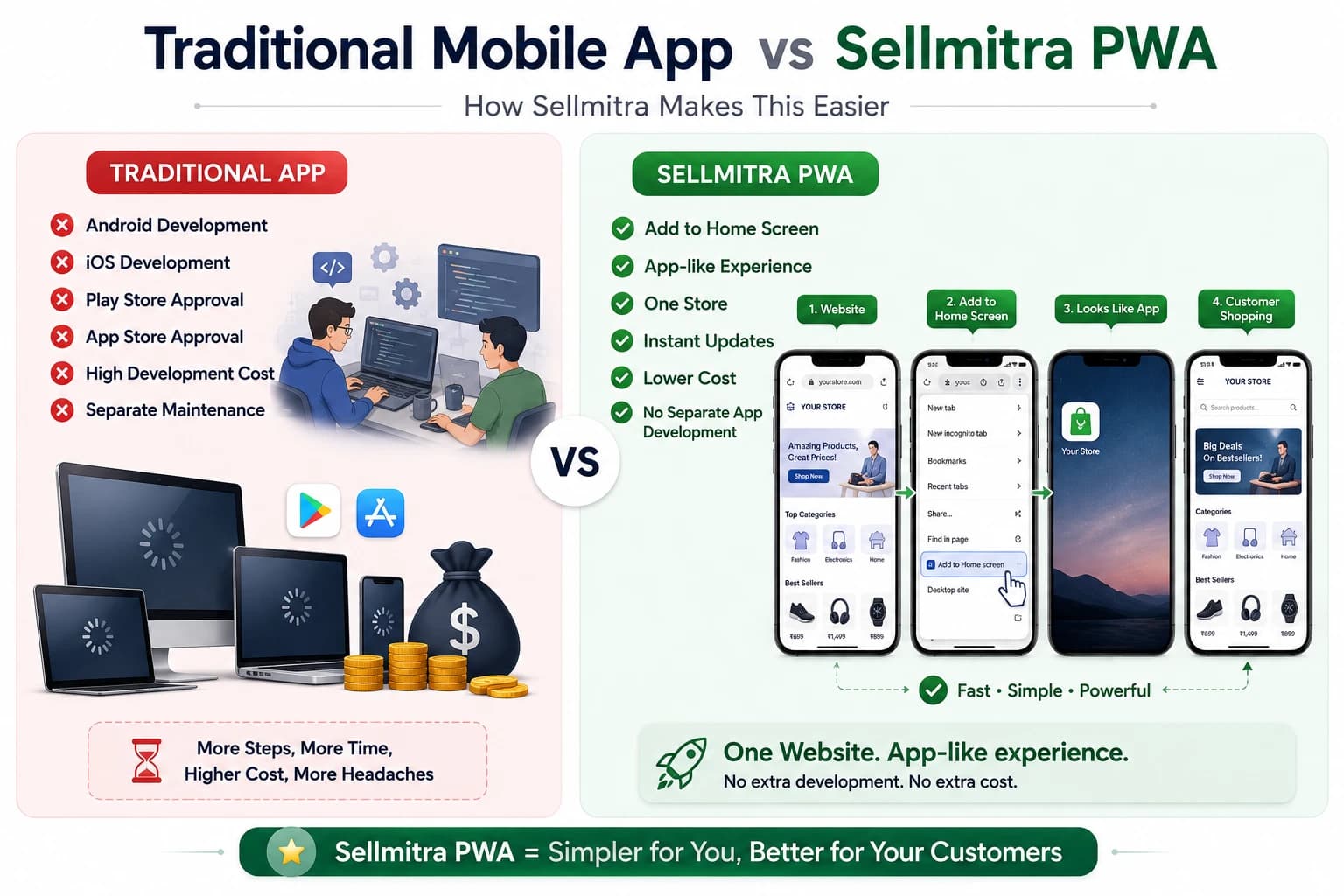
Customers simply visit your online store using their browser.
They can then choose "Add to Home Screen."
Your store now appears on their phone alongside other apps.
From the customer's perspective, it feels much like using a regular mobile application, without requiring a traditional app-store installation.
Progressive Web Apps offer several practical advantages.
Customers can launch your store directly from their home screen.
They don't need to remember your website address every time.
Modern PWAs provide smooth navigation and a familiar mobile interface.
Supported browsers allow PWAs to send push notifications after users grant permission, helping businesses share updates and offers.
Instead of maintaining separate website and app experiences, businesses can manage a single platform.
Many ecommerce platforms require businesses to build separate native mobile applications if they want an app experience.
Sellmitra takes a different approach.
Every Sellmitra store includes a Progressive Web App (PWA).
This means merchants can offer customers an app-like shopping experience without investing in separate Android and iOS development.
Some practical advantages include:
For many small and medium businesses, this provides a practical balance between functionality, simplicity, and cost.
A PWA can be valuable for almost any ecommerce business, but it is especially useful for businesses with repeat purchases.
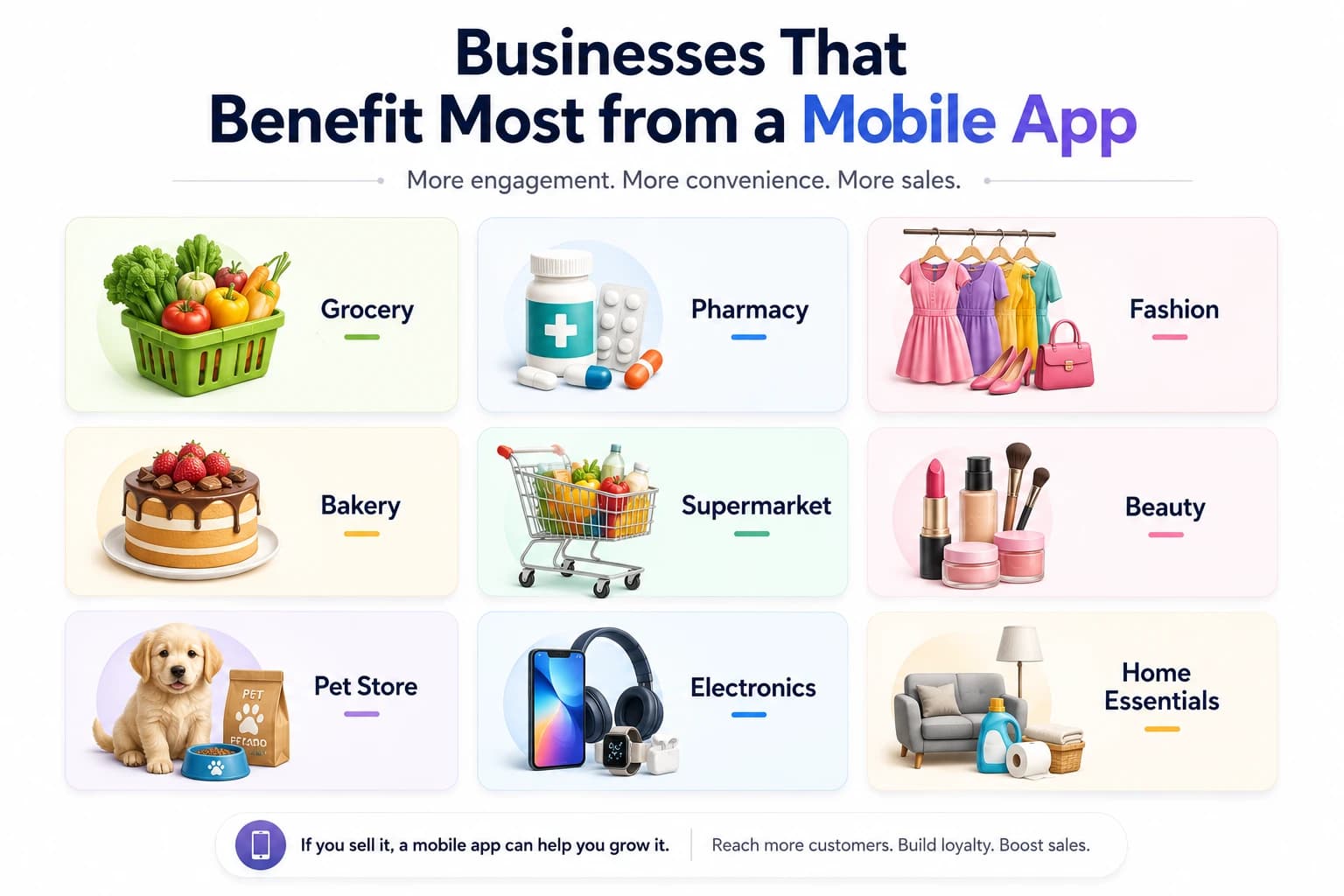
Examples include:
If customers are likely to return regularly, making that journey faster and easier can improve the overall shopping experience.
Consumer behaviour has changed dramatically over the past decade.
People now spend a significant portion of their digital time on smartphones.
They expect shopping experiences that are quick, convenient, and always within reach.
Businesses that adapt to these expectations are better positioned to serve modern customers.
A website remains an essential foundation, but for many ecommerce businesses, providing an app-like experience has become an important competitive advantage.
Progressive Web Apps make that possible without the complexity and cost traditionally associated with native mobile app development.
10 years ago, having a website helped businesses establish an online presence.
Today, businesses need to think beyond simply being online.
Customers expect convenience. They expect speed. They expect shopping experiences that fit naturally into the devices they use every day.
India's ecommerce market is increasingly driven by smartphones, and global trends point in the same direction. Whether you're running a grocery store, a fashion brand, a pharmacy, or any other online business, making it easier for customers to return can make a meaningful difference.
A Progressive Web App is not a replacement for a good website. Instead, it extends your website into an app-like experience that stays close to your customers.
For businesses looking to grow without the cost and complexity of separate native apps, a PWA offers a practical and future-ready solution.

Join our WhatsApp channel for quick tips, product updates, and ideas to help you grow your online store efficiently.
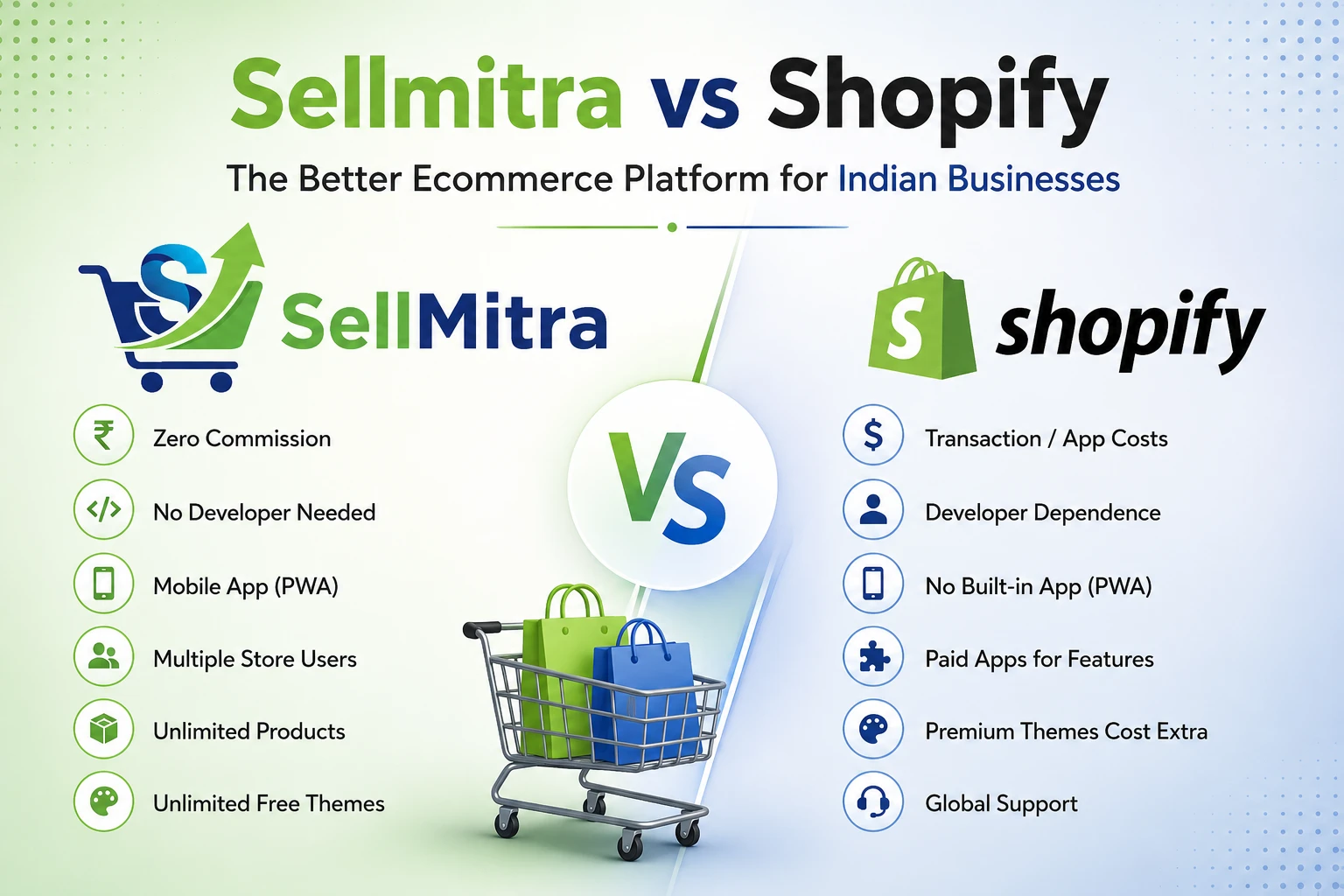
Compare Sellmitra and Shopify to find the right ecommerce platform for your business. Learn about pricing, mobile-first features, zero commission, and Indian-focused tools.
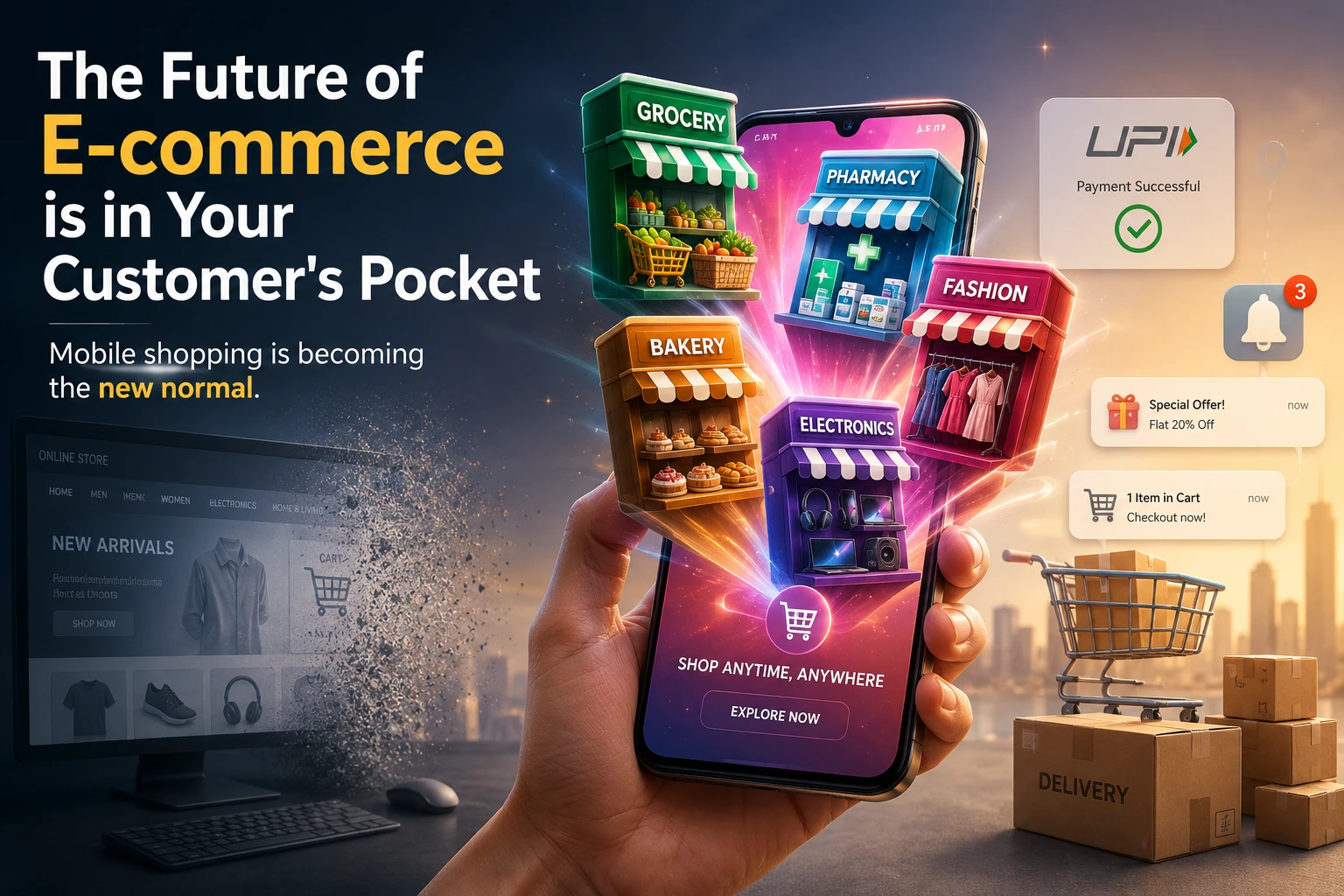
Discover why mobile apps are transforming ecommerce in India. Learn the benefits of PWAs, mobile commerce trends, and how they help grow sales.

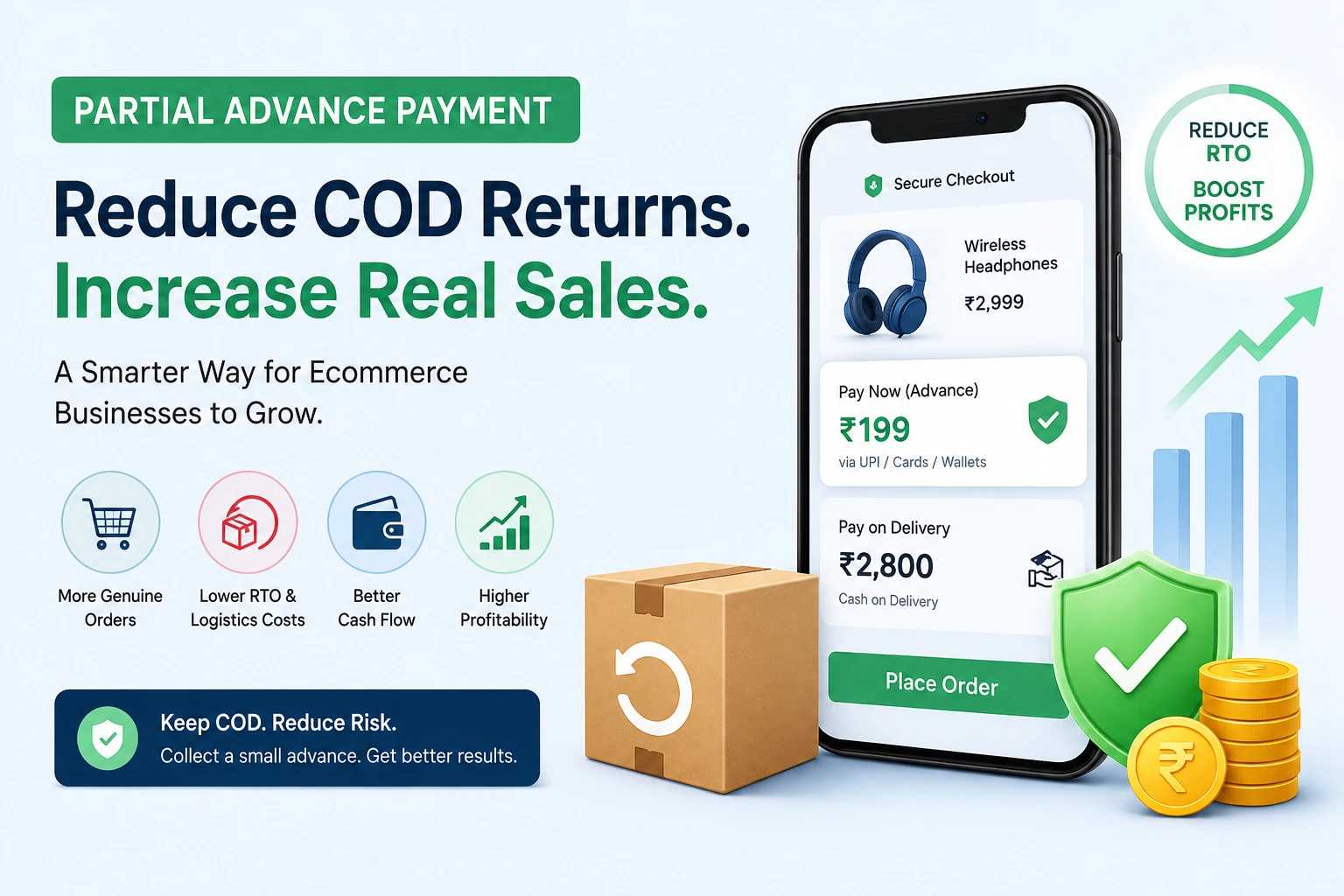
Learn how Partial Advance Payment helps ecommerce businesses reduce RTO, improve cash flow, increase genuine orders, and build customer trust without removing Cash on Delivery.
We can help you to create your dream website for better business revenue.