Why Sellmitra is the Best Shopify Alternative in India
Compare Sellmitra and Shopify to find the right ecommerce platform for your business. Learn about pricing, mobile-first features, zero commission, and Indian-focused tools.

For many small resellers, selling online does not start with a website. It starts with a WhatsApp message.
A product photo arrives from a wholesaler. The reseller adds their margin, posts the product on WhatsApp Status or Instagram, sends it to a few customers, and waits for enquiries.
There may be no warehouse, no physical shop, no ecommerce website and no complicated sales system. Just a phone, a product catalogue and a network of customers.
For wholesalers and manufacturers, this represents a significant opportunity. Your resellers are not only your buyers. They can become an extended sales and distribution network for your products.
The challenge is making it easy for them to actually sell.
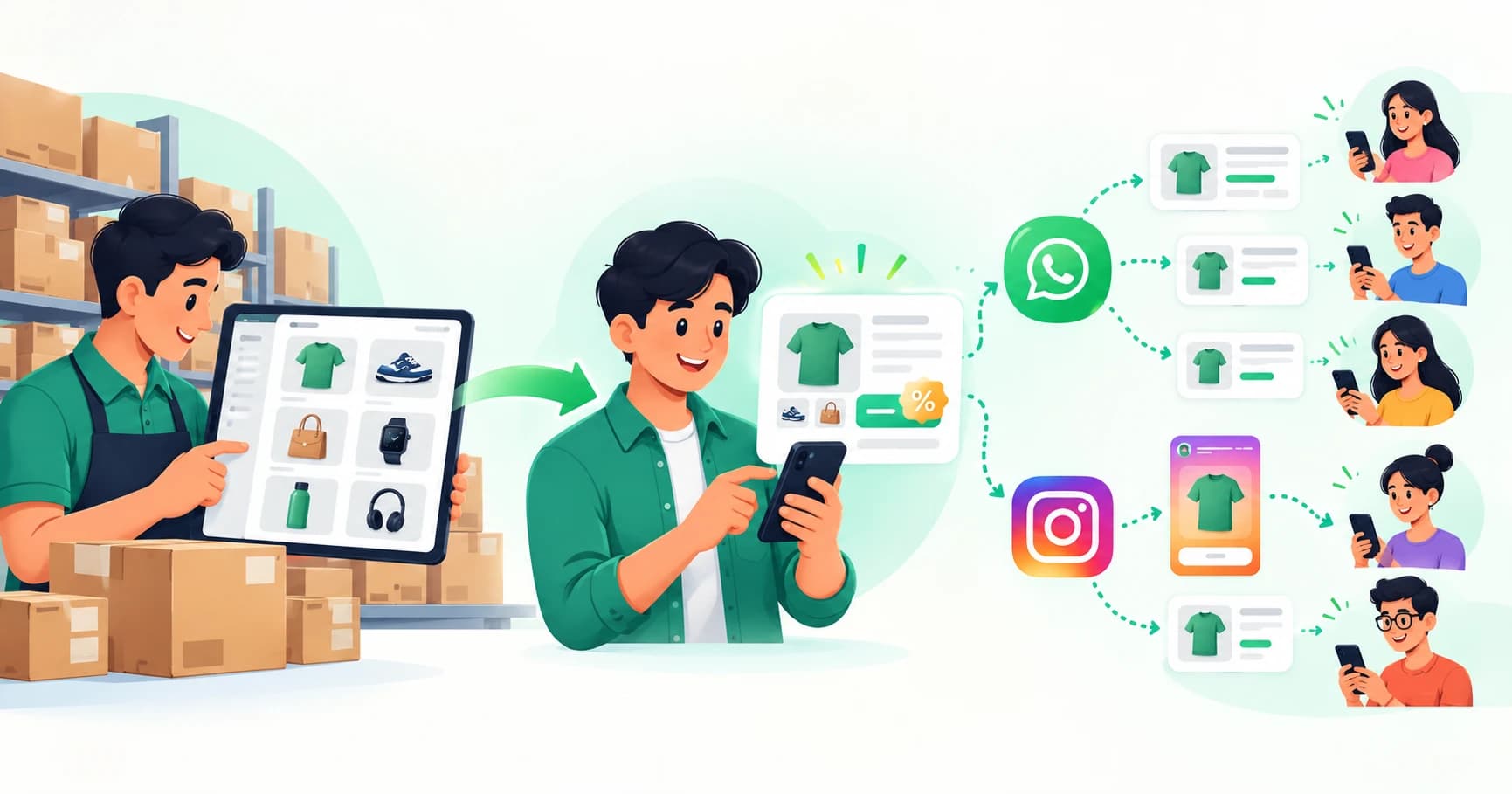
India’s online shopping journey is increasingly moving through social media and messaging platforms.
A 2024 Meta and Bain & Company report estimated that more than 650 million Indians were active on social media and messaging platforms, including WhatsApp, Instagram, Facebook and YouTube, while only around 200 million were shopping online at the time. The report described this as a significant untapped opportunity for conversational commerce.
More recent research from Meta and the Retailers Association of India shows how quickly this behavior is developing. Their 2026 retail whitepaper reports that:
These numbers do not mean that every reseller will automatically generate 22% higher order values. They do, however, show something important: WhatsApp and social media are no longer just communication channels. They are becoming part of the shopping journey.
Consider a wholesaler with 100 active resellers.
The traditional way of looking at the business is:
“I have 100 customers.”
But there is another way to look at it:
“I have 100 people who can potentially introduce my products to their own customers.”
Each reseller may have:
The wholesaler does not necessarily need to acquire every end customer directly. The reseller already has the relationship. This is one of the reasons social-commerce models have worked so well in India.
One of India’s best-known examples is Meesho. Meesho built its early growth around a reseller model in which individuals could select products from suppliers, share them with their own customers through social networks, add a margin, and earn from the resulting sales. The model effectively turned individual sellers into a distributed sales force.
Recent third-party analysis of Meesho’s model reports a network of more than 14 million resellers and more than 175 million users across 27,000 PIN codes, although these figures come from industry analysis rather than a current Meesho corporate filing and should be treated accordingly.
The more important lesson is the business model itself. The reseller did not need to manufacture the product. The reseller did not necessarily need to hold inventory. The reseller brought something different: Distribution + trust + access to customers.
That is exactly what makes reseller networks interesting for wholesalers today.
Suppose a wholesaler sells a product for ₹500. The reseller wants to sell it for ₹650.
The reseller has to:
One product may not be a problem. But imagine doing this for 20 products. Or 50 products. Or 200 products.
The problem isn’t that the reseller cannot do it. The problem is that there is too much friction. And friction affects behavior.
If sharing one product takes seconds, a reseller may share 20 products. If every product requires downloading, editing, saving and uploading, they may share only a few.
Imagine the reseller opens the wholesaler’s product catalogue. They select a product:
Wholesale Price: ₹500
Then enter:
Reseller Margin: ₹150
The system automatically calculates:
My Selling Price: ₹650
The reseller clicks Generate & Share. A ready-to-share product image is created. The reseller can immediately share it to:
The process becomes:
Select Product → Add Margin → Generate → Share
That is a very different experience from manually editing every product.
Resellers don’t all sell to the same customers. One reseller may sell a product at ₹599. Another may sell it at ₹649. Another may sell it at ₹699 because they provide local delivery, customer support, installation or other services.
The supplier should not necessarily have to change the base product price every time. Instead, the reseller can determine their own selling price. For example:
| Price | |
|---|---|
| Supplier Price | ₹500 |
| Reseller A | ₹599 |
| Reseller B | ₹649 |
| Reseller C | ₹699 |
The supplier’s underlying price remains unchanged. The reseller controls their selling price. This gives the reseller flexibility without forcing the wholesaler to maintain hundreds of different product prices.
A wholesaler traditionally gives a reseller Product + Price. But a better reseller experience gives them Product + Price + Image + Selling Price + Sharing.
You aren’t merely giving resellers a catalogue. You are giving them a way to turn the catalogue into sales content.
WhatsApp is deeply integrated into business communication in India. Meta reported in 2023 that more than 60% of people on WhatsApp in India message a business account, while it was also working with ONDC to help small businesses build conversational buyer and seller experiences.
By 2025, Meta reported that 91% of online adults in India chatted with businesses weekly, based on Kantar research. And WhatsApp’s role is becoming even broader. Meta’s 2026 retail research says 72% of product discovery happens on WhatsApp.
That makes WhatsApp particularly interesting for reseller-driven businesses. The reseller is already talking to the customer there. Why force them to move the customer somewhere else just to show a product?
A reseller might have 500 or 1,000 contacts but no ecommerce website. Their WhatsApp Status effectively becomes a daily product showcase. For example:
Every Status post can act as a small product advertisement. The reseller does not need to individually message every customer. Customers who are interested can reply directly.
This is especially relevant because WhatsApp has continued expanding business and discovery capabilities around Status and its Updates tab. Meta says the Updates tab is used by 1.5 billion people globally every day, and businesses are increasingly being given tools to promote content there.
The same product image can be used on Instagram. A reseller can take the product generated from the wholesaler’s catalogue and publish it as:
This creates a simple principle:
Create the product content once. Distribute it everywhere.
That is particularly valuable for small resellers who don’t have a dedicated marketing team.
Meta’s 2025 research with the Retailers Association of India found that almost 8 in 10 Indian shoppers discover products through social media, with 96% of those social discoveries occurring on Meta platforms. It also reported that nearly 60% of users were likely to buy after seeing an offer on WhatsApp.
So the question for a wholesaler isn’t simply “ Should my resellers sell online?” The more useful question is:
“How easily can my resellers put my products in front of their existing audience?”
Meesho provides one of the clearest Indian examples of this model. Its early social-commerce strategy connected suppliers with individuals who already had relationships with potential customers. The reseller could:
Find product → Share product → Add margin → Sell to customer
The platform handled much of the infrastructure underneath. Industry analysis describes this model as turning social networks and personal trust into a distribution mechanism, particularly across Tier 2 and Tier 3 markets.
The lesson for wholesalers is not that they should become Meesho. The lesson is much simpler: Your existing reseller network may already contain a significant amount of unused distribution capacity.
Asomkriti, an ecommerce business selling handloom and handicraft products from Northeast India, used WhatsApp Business to improve customer communication and sales. According to a published case study, WhatsApp contributed 41% of the business through reseller and direct customer orders, while the business reported a 50% increase in conversation rate and 80% retention after adopting WhatsApp Business tools. These figures are case-study results, not an industry benchmark.
The takeaway is important: WhatsApp doesn’t have to be treated as just a support channel. It can become part of the actual sales process.
Imagine a wholesaler has 500 products and 100 active resellers. The wholesaler may have access to potentially hundreds of thousands of end-customer relationships through those resellers.
Of course, you should not simply multiply 100 resellers by an assumed number of contacts and call that your reach. Not every reseller is active. Not every contact is a customer. Not every customer will see a Status. And not every viewer will buy.
But the basic distribution advantage remains:
The wholesaler does not have to build every customer relationship from scratch.
The reseller already has one.
For wholesalers, one of the most important metrics may not be the number of registered resellers. It may be: how many products does each reseller actually promote?
Consider two networks.
| Network | Resellers | Avg shared / week | Total shares / week |
|---|---|---|---|
| Network A | 100 | 3 products | 300 |
| Network B | 100 | 15 products | 1,500 |
The reseller count hasn’t changed. But the amount of product exposure has increased dramatically. That is why reducing the effort required to share products can be commercially important.
Think of the model as a simple funnel:
Wholesaler → Reseller → WhatsApp / Instagram → Reseller’s audience → Customer enquiry → Order
The wholesaler controls the product. The reseller controls the relationship. Social platforms provide the distribution. The customer makes the purchase. A good reseller-selling system makes the entire chain easier.
A reseller shouldn’t need Photoshop or another design application. They should be able to do everything from their phone.
The goal should be:
From product catalogue to customer-facing post in seconds.
A traditional wholesaler may give a reseller a catalogue and say: “Here are our products. Sell them.” A stronger approach is:
“Here are our products. Here are ready-to-use images. Add your margin and start selling.”
That changes the role of the supplier. The supplier becomes not just an inventory source, but a sales enablement partner.
The reseller gets:
Most importantly: they can focus on selling instead of preparing content.
This model can work particularly well for:
The common factor isn’t the product category. It’s the business model:
One business supplies products. Another person sells those products to their own customers.
This isn’t limited to reseller businesses. Suppose a business sells both wholesale and retail. The product has a Retail Price of ₹1,000 and a Wholesale Price of ₹750.
A retailer may need the wholesale price. A normal customer needs the retail price. A reseller may want to add their own margin. The business can therefore create different selling contexts without constantly changing the main product information. For example:
| Customer Type | Selling Price |
|---|---|
| Retail Customer | ₹1,000 |
| Reseller A | ₹1,150 |
| Reseller B | ₹1,200 |
| Wholesale Buyer | ₹750 |
The exact pricing model will depend on the business, but the important concept is: one product can support different selling relationships.
There is one important distinction wholesalers should remember. A product being shared does not automatically mean it will sell. A reseller can share 100 products and generate zero orders.
Therefore, the goal should not simply be “increase product shares.” The better goal is “increase productive reseller activity.” Track:
This gives wholesalers a much clearer picture of whether their reseller network is actually contributing to sales.
You don’t necessarily need to hire 100 more salespeople. You may already have 100 people selling your products. They are your resellers. They have their own customers, their own WhatsApp contacts, their own Instagram followers. They already have trust.
What they may need is a better way to use your products as selling material. The opportunity for wholesalers is therefore not simply to build a larger reseller network. It is to make the existing network more active, more productive and easier to sell through.
That’s how a reseller network can become more than a list of buyers. It can become a distributed sales channel.
Sellmitra is designed to make product selling easier for businesses and their reseller networks. A business can provide its product catalogue to sellers while allowing them to work with their own selling prices and margins.
Instead of manually downloading and editing product images, sellers can use product information to create content that is ready to share. The objective is simple:
Make it easier for every reseller to take a product from your catalogue and put it in front of their customers.
Because sometimes the next sale isn’t waiting for you to find a new customer. It is waiting for your existing reseller to share one more product.

Join our WhatsApp channel for quick tips, product updates, and ideas to help you grow your online store efficiently.
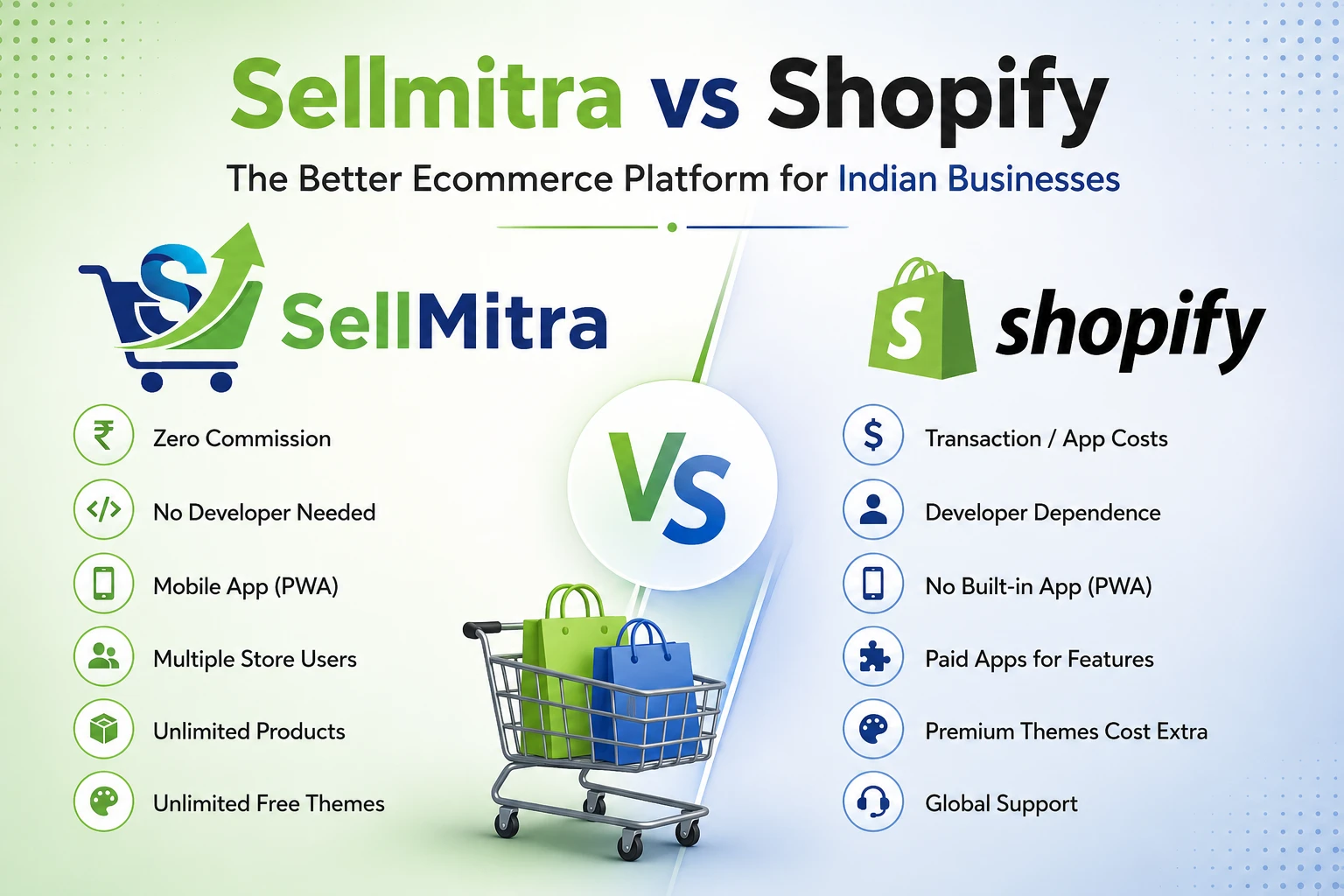
Compare Sellmitra and Shopify to find the right ecommerce platform for your business. Learn about pricing, mobile-first features, zero commission, and Indian-focused tools.
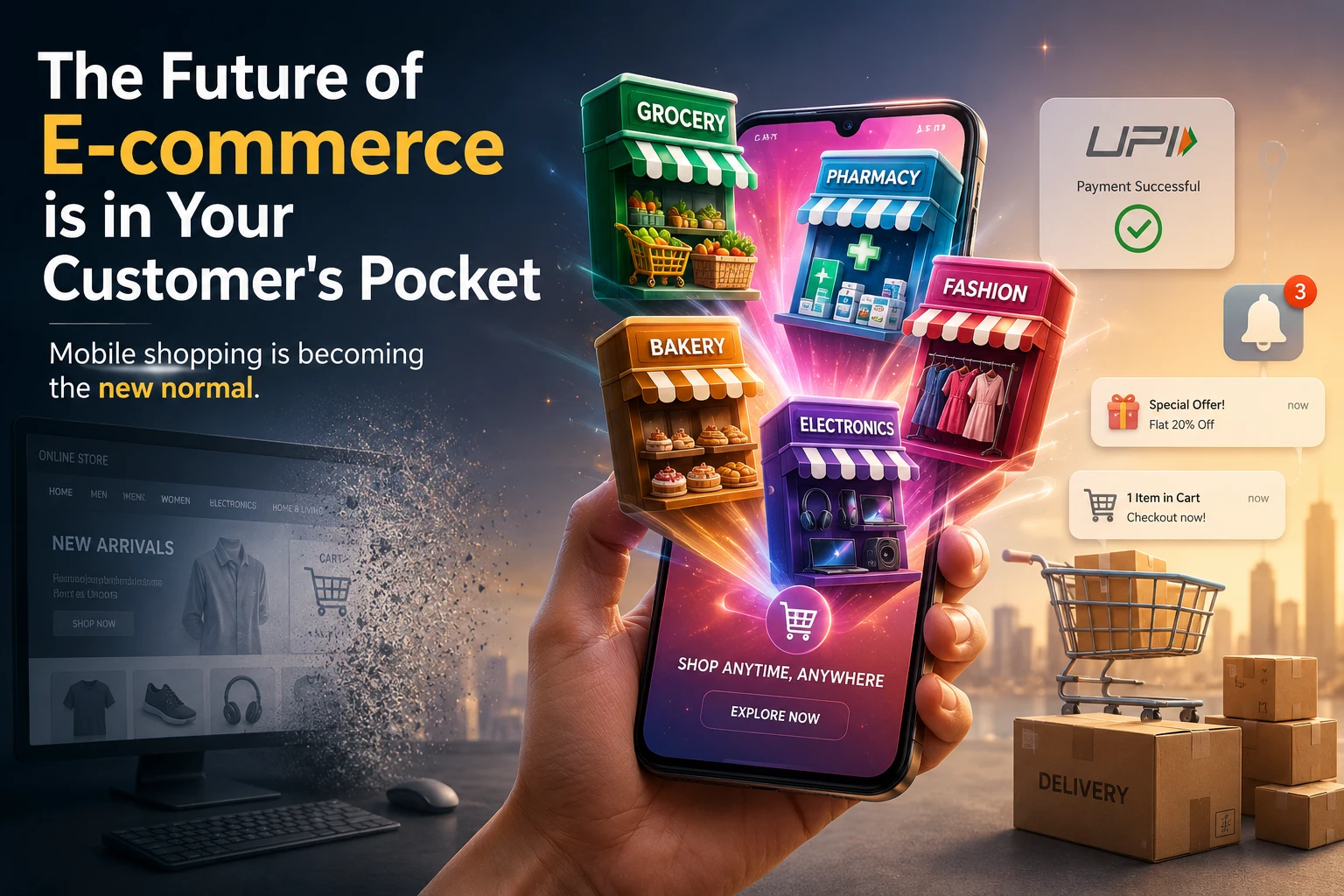
Discover why mobile apps are transforming ecommerce in India. Learn the benefits of PWAs, mobile commerce trends, and how they help grow sales.

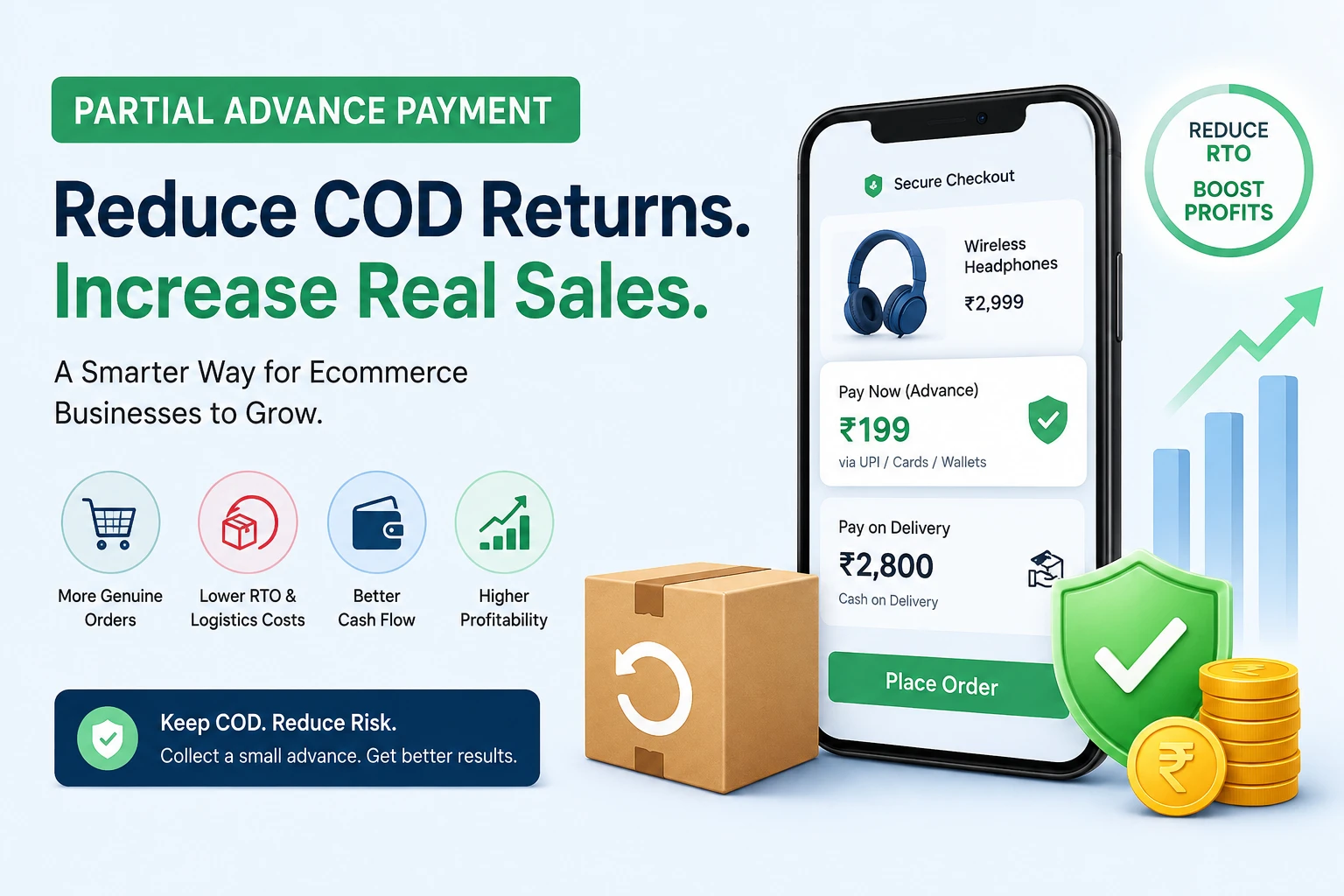
Learn how Partial Advance Payment helps ecommerce businesses reduce RTO, improve cash flow, increase genuine orders, and build customer trust without removing Cash on Delivery.
We can help you to create your dream website for better business revenue.